

How to Validate Your Crowdfunding Idea in Minutes with AI
If you’re thinking about launching on Kickstarter or Indiegogo, you’re probably wrestling with the same questions most creators do:
- Is my idea actually original?
- Will anyone care enough to back this?
- Am I about to walk into a patent or trademark mess?
Most people try to answer those questions with late-night Googling, a few Reddit threads, and “gut feel.” That’s exactly how good ideas die quietly or end up in expensive legal and manufacturing problems.
InventaIQ exists to give you something better: a structured, AI-driven way to validate your crowdfunding idea before you bet your savings, time, and reputation on it. The goal isn’t to hype you into launching. It’s to tell you the truth about your idea so you can improve it—or consciously walk away—before the stakes get high.
This blog walks through how that validation works, in a simple Q&A format you can skim and act on.
Why Is Crowdfunding Idea Validation So Important?
Why should you validate your crowdfunding idea before launch?
Because most failed campaigns skip serious validation. Early checks on demand, competition, IP risks, and basic feasibility save you from investing months of effort into something that was never positioned to succeed.
If you peel back the story on most failed campaigns, the pattern is boringly consistent:
- The creator never really checked whether similar products already exist.
- They didn’t look closely at how crowded their category was on Kickstarter/Indiegogo.
- They assumed “people will just get it” instead of testing the pitch.
- They guessed at a funding goal without mapping costs and margins.
Validation doesn’t magically guarantee success. What it does is force you to answer four blunt questions up front:
- Is this idea meaningfully different from what’s already out there?
- Is there any real evidence that people want it?
- Can I protect it, or am I walking into someone else’s IP territory?
- Does the basic math (costs → price → goal) add up?
Validation doesn’t magically guarantee success. What it does is force you to answer four blunt questions up front:
- Three very similar products already exist.
- One of them failed badly because of safety concerns.
- There’s an existing patent on a specific heating mechanism you were planning to use.
That’s not a reason to quit. It’s a reason to refine before you go public.
Validation is not about killing your idea—it’s about forcing the idea to grow up.
What Is a Campaign Readiness Scan?
What is a campaign readiness scan in crowdfunding?
A campaign readiness scan is an AI-driven assessment that analyzes your idea’s originality, IP risk, market demand, and competitive landscape to estimate how “launch-ready” it is.
In practical terms, a campaign readiness scan with InventaIQ is a structured diagnostic, not a magic button.
At a high level, the scan looks at:
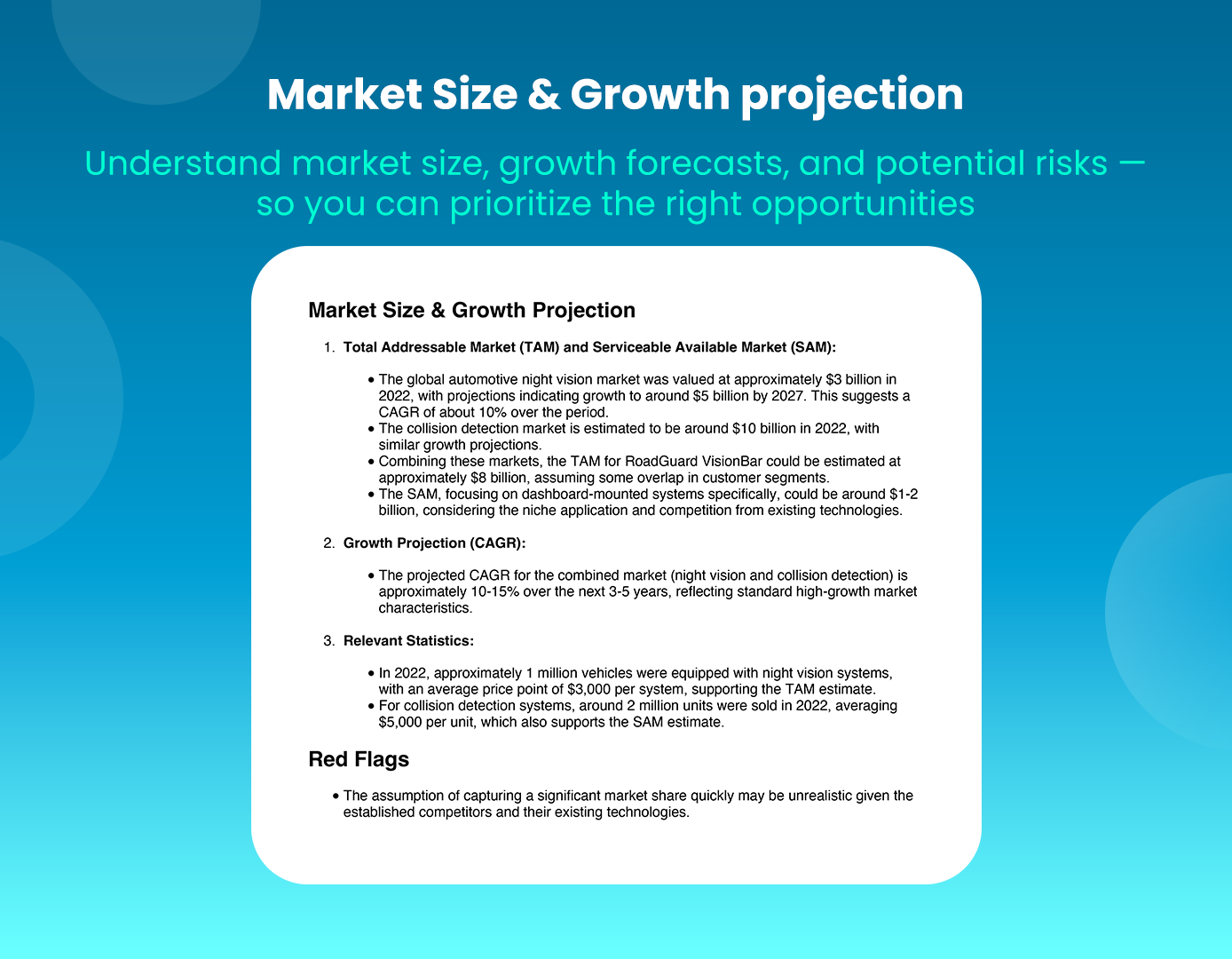
- Market demand signals for your category
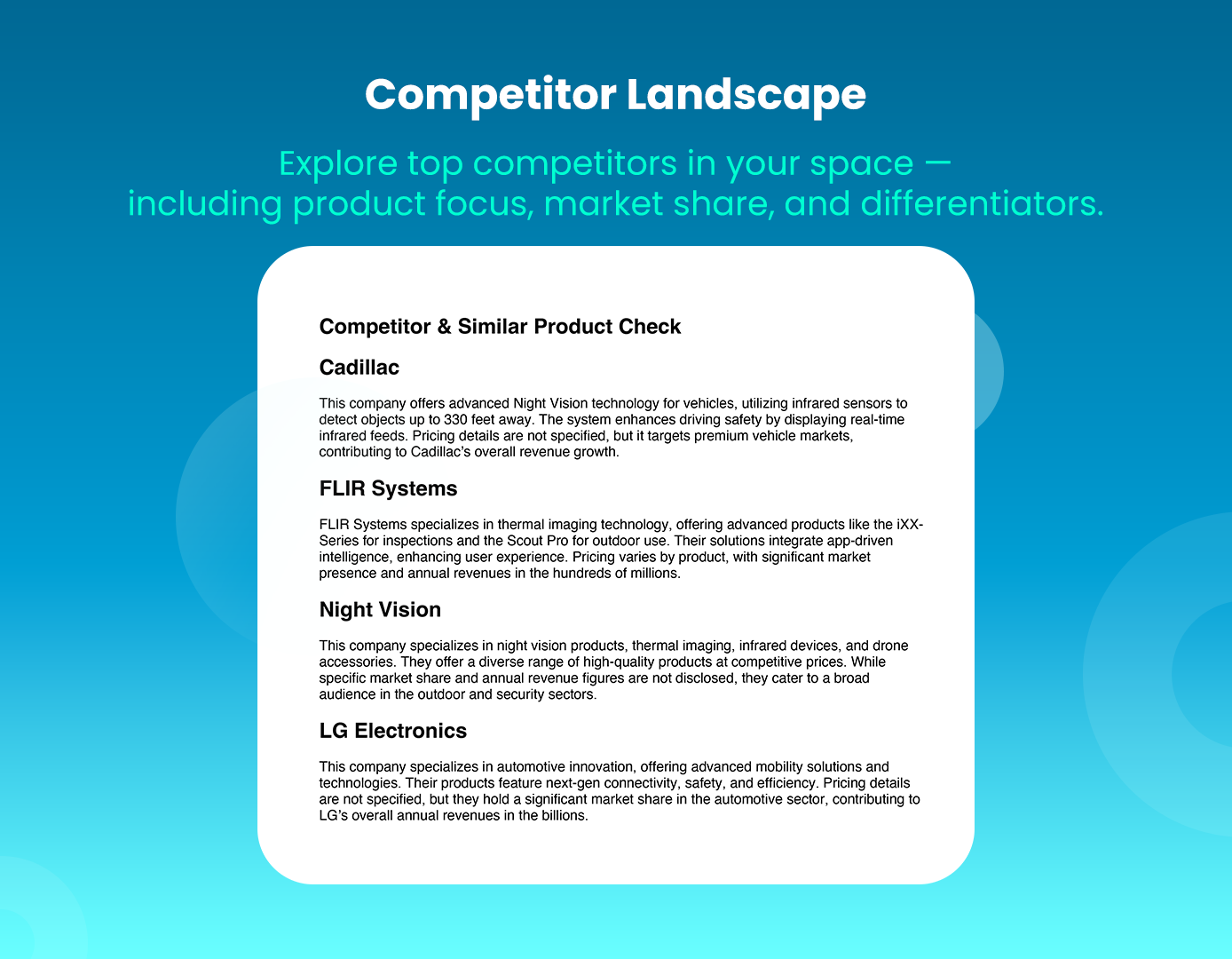
- Competitor density (how many similar campaigns/products already exist)
- Patent/trademark conflict risk based on your core idea and brand name
- Basic feasibility for crowdfunding (does this belong on Kickstarter/Indiegogo at all?)
You give the AI a clear description of your idea—for example:
“A modular, magnetic cable organizer for remote workers, designed to keep laptop, phone, and headset cables clean on a small desk.”
The scan then:
- Maps that idea against known product and campaign patterns
- Looks for close patent/trademark conflicts around key phrases and features
- Checks how similar projects have performed in crowdfunding
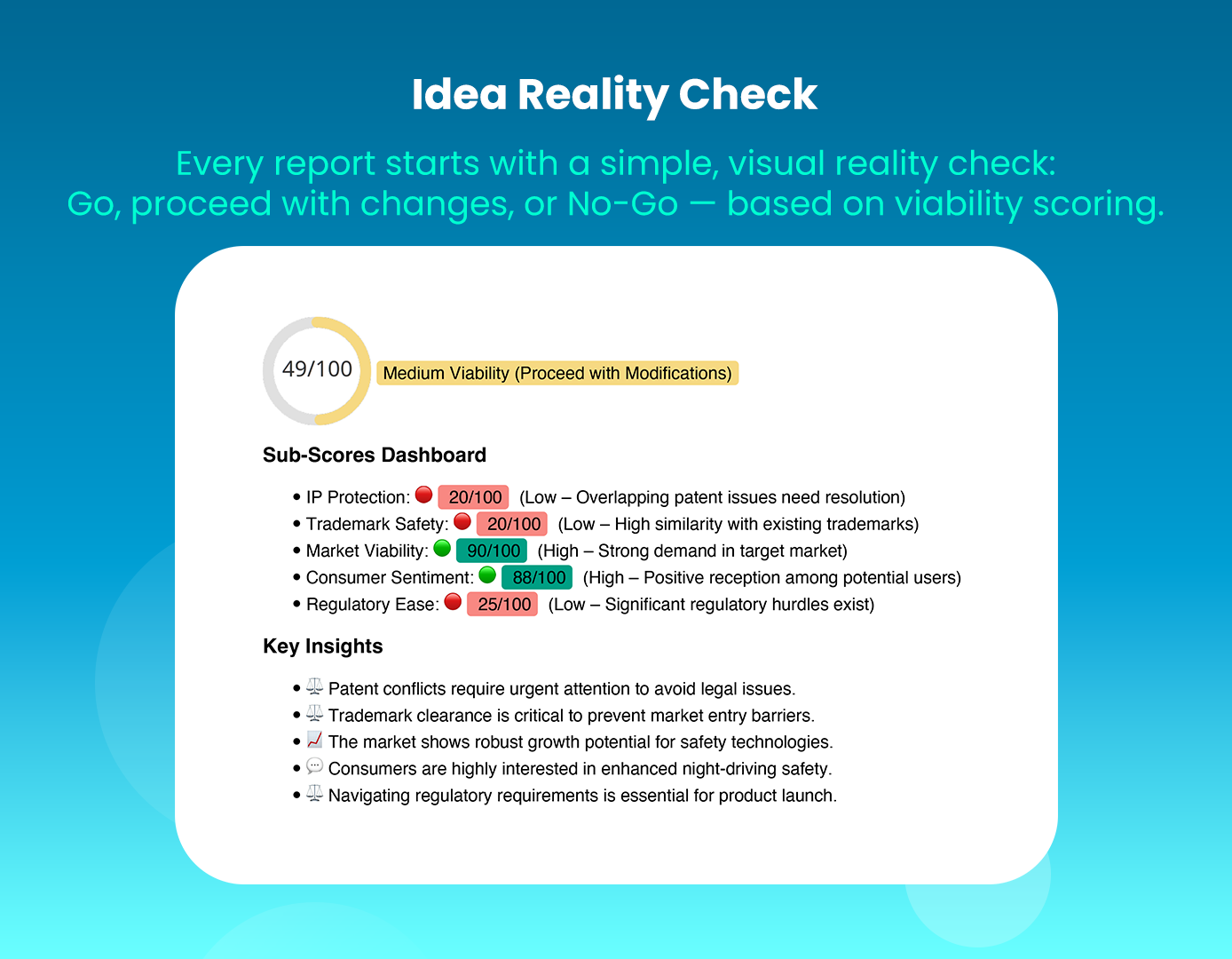
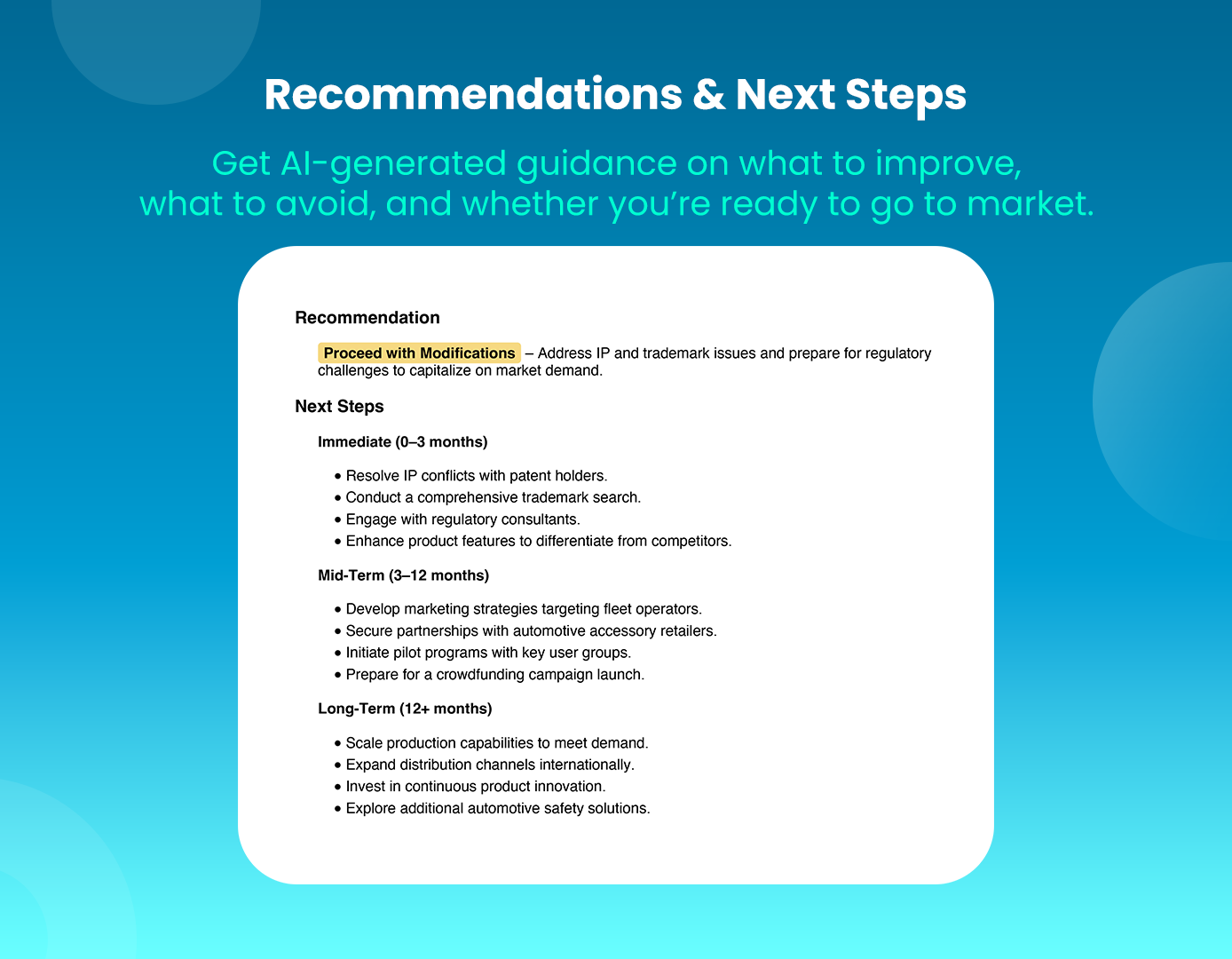
- Assigns a Readiness Score along with sub-scores (IP risk, competition, viability)
The output is not a vague “yes/no.” You get a structured picture:
- “IP risk: low–medium, watch these specific claims.”
- “Competition: high in generic cable organizers, lower in remote-work niche.”
- “Viability: reasonable if positioned around space-saving and remote-work stress reduction.”
The point is simple: you should know where you stand before you start asking strangers for money.
How Does AI Help Validate a Crowdfunding Idea?
How can AI validate your crowdfunding idea?
AI pulls together patterns from patents, trademarks, existing products, and past crowdfunding campaigns to quickly tell you whether your idea looks original, in-demand, and feasible—work that would take you weeks to do manually.
Instead of reading patents one by one, trawling through Kickstarter archives, and scanning Amazon reviews by hand, AI can:
- Scan market demand
- Identify whether your category is growing, stagnant, or fatigued
- Surface what people actually complain about in existing products
- Run competitor similarity checks
- Compare your core features against thousands of campaigns and listings
- Highlight where you’re genuinely differentiated vs. where you’re just “another version”
- Flag patent and trademark risk early
- Spot high-level overlaps with existing patents and marks
- Nudge you to talk to a qualified IP professional before you reveal too much publicly
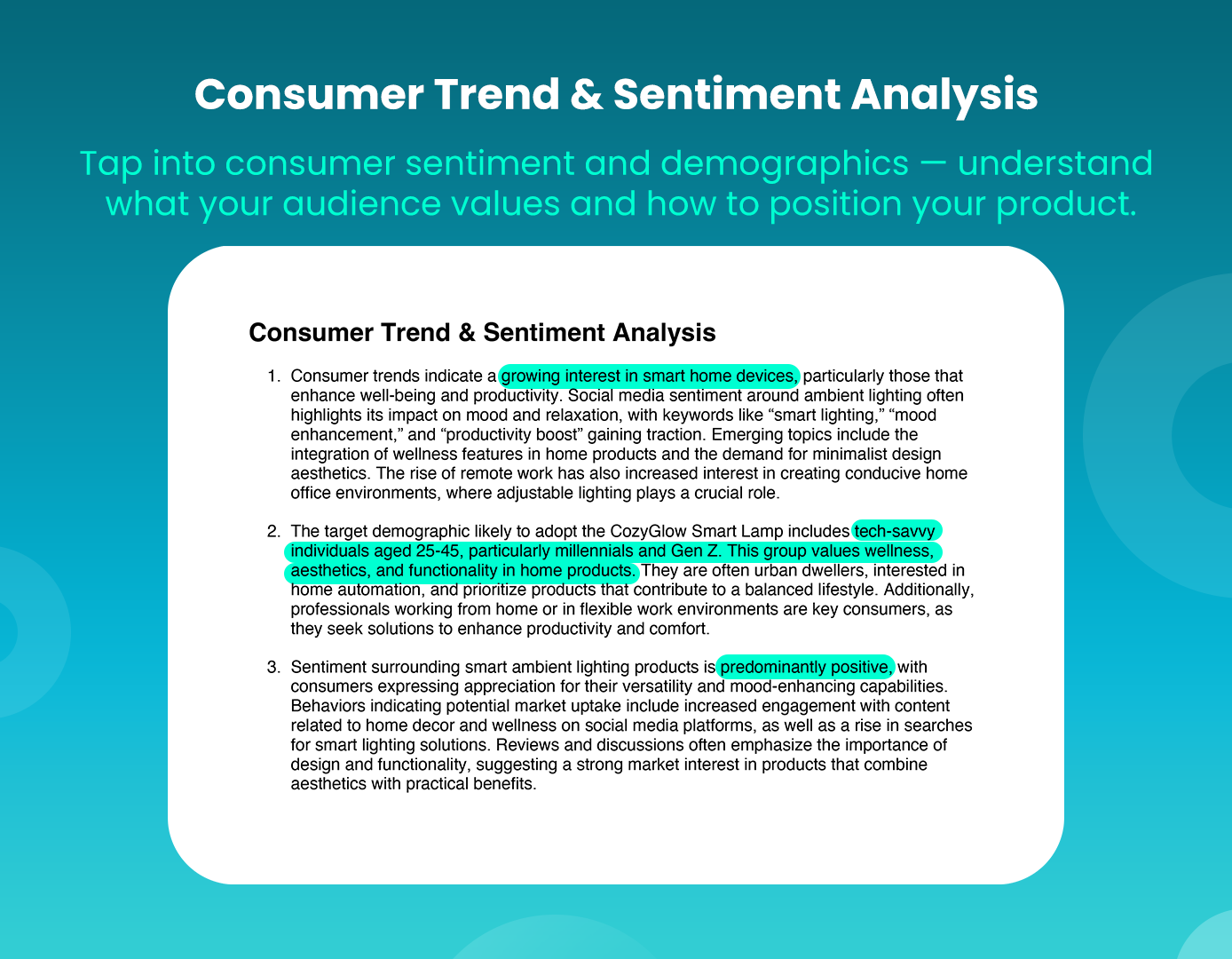
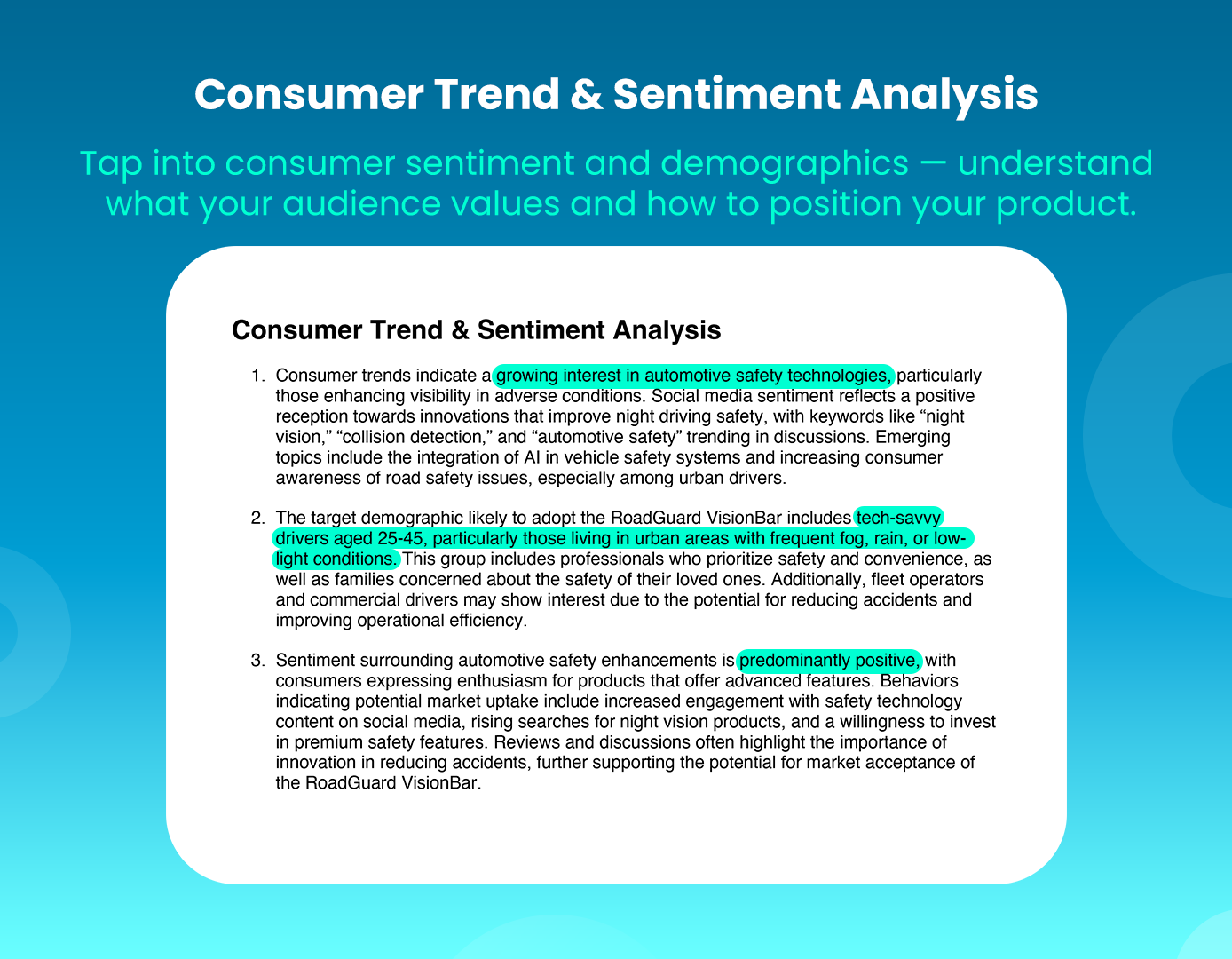
- Analyze backer-style sentiment
- Pull patterns from real comments and reviews in your category
- Show what people praise, what they hate, and what they’re tired of seeing
For example, say you’re working on a compact travel clothes steamer. An AI-driven scan might surface:
- Frequent complaints that existing steamers leak and take too long to heat
- Several patents around specific heating elements you need to avoid
- A cluster of successful campaigns that leaned heavily on “hotel-proof” design and fast warm-up time
You now know that “compact” alone is not enough of a hook. You probably need to emphasize speed, no leaks, and real travel durability—and maybe rethink your internal design to avoid patent landmines. The AI isn’t smarter than you. It’s just faster at pulling the raw material you should be thinking about anyway.
Can You Validate a Crowdfunding Idea in Minutes?
Can you validate a crowdfunding idea in minutes?
You can’t solve every problem in minutes—but you can get a first, structured reality check in under five minutes using an AI-driven readiness scan. That’s often enough to spot obvious red flags and decide whether deeper work is worth it.
Here’s what “minutes, not months” actually looks like with InventaIQ:
- You describe your idea clearly.
Example: “A smart bike light that auto-adjusts brightness based on ambient light and speed.” - The AI runs a quick scan.
- Checks for similar campaigns and products
- Looks for high-level patent/trademark conflicts
- Benchmarks basic viability for crowdfunding
- You get a first-pass report.
- A Readiness Score (e.g., 63/100)
- A few blunt observations: “Category is competitive, but there’s a gap in night-commuter focus,” or “Potential IP overlap around smart sensing module.”
- You decide what to do next.
- If the score and notes are terrible, you can rethink early—before you’ve sunk too much time.
- If the results are promising but imperfect, you know exactly what to refine.
This is not a replacement for detailed planning, manufacturing quotes, or a conversation with a patent attorney. It’s a way to avoid blindly walking into problems everyone could have seen coming.
After this scan, you either:
- Tighten your concept and re-run, or
- Park the idea and move on to something stronger, or
- Move forward with more confidence into deeper planning.
Either outcome is better than staying stuck in “I feel like it’s good, but I’m not sure.”
What Does InventaIQ’s Campaign Readiness Report Include?
What does a campaign readiness report show?
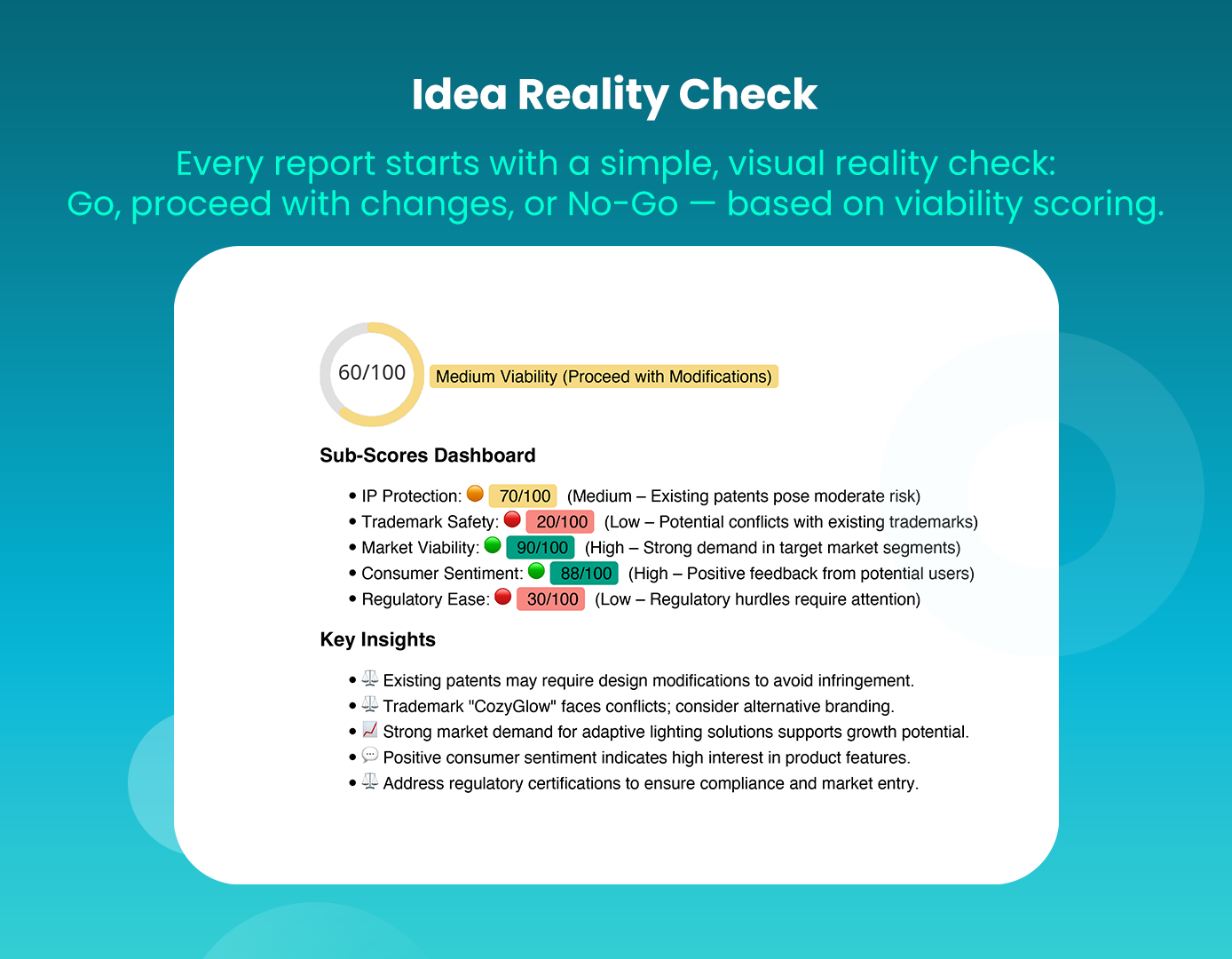
It summarizes how ready your idea looks for crowdfunding across key dimensions: market demand, competition, IP risk, and overall go/no-go guidance—so you’re not guessing what to fix next.
A typical InventaIQ Campaign Readiness Report includes:
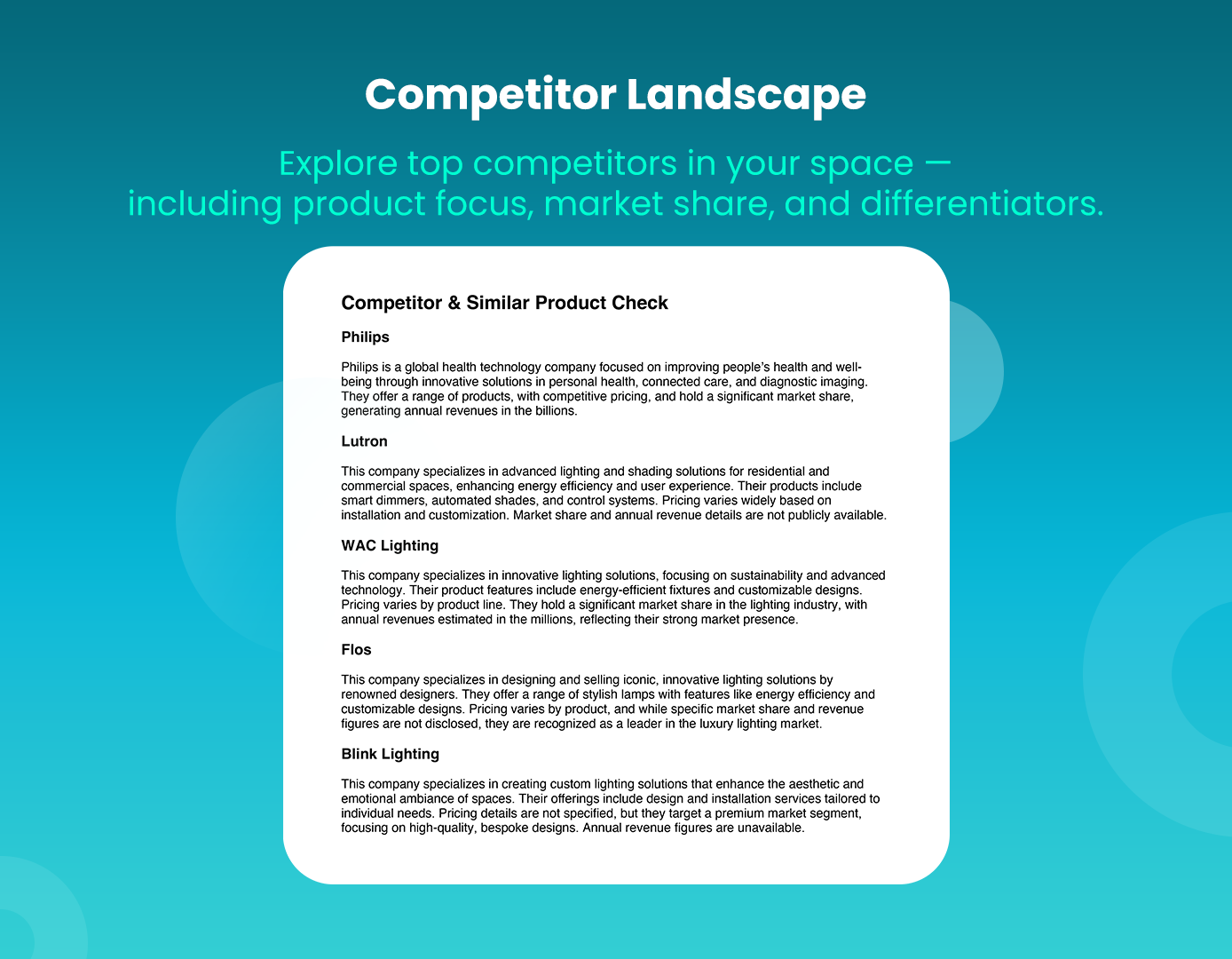
- Market Demand Snapshot
- Is your category hot, cold, or somewhere in the middle?
- Are people actively searching, talking, and complaining about related products?
- Competition Density
- How many similar products or campaigns exist?
- Are you entering a mature, crowded space or a thin, under-served one?
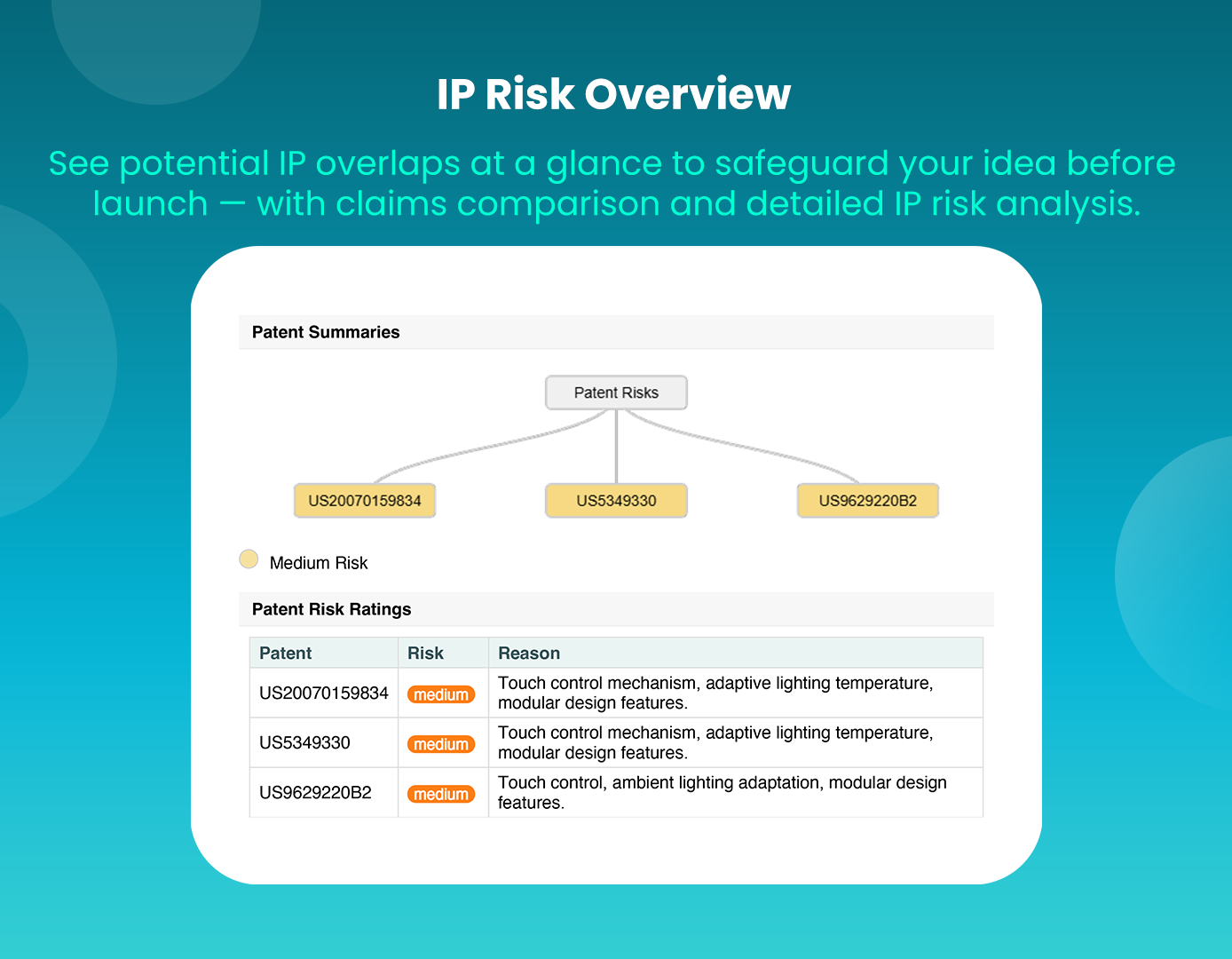
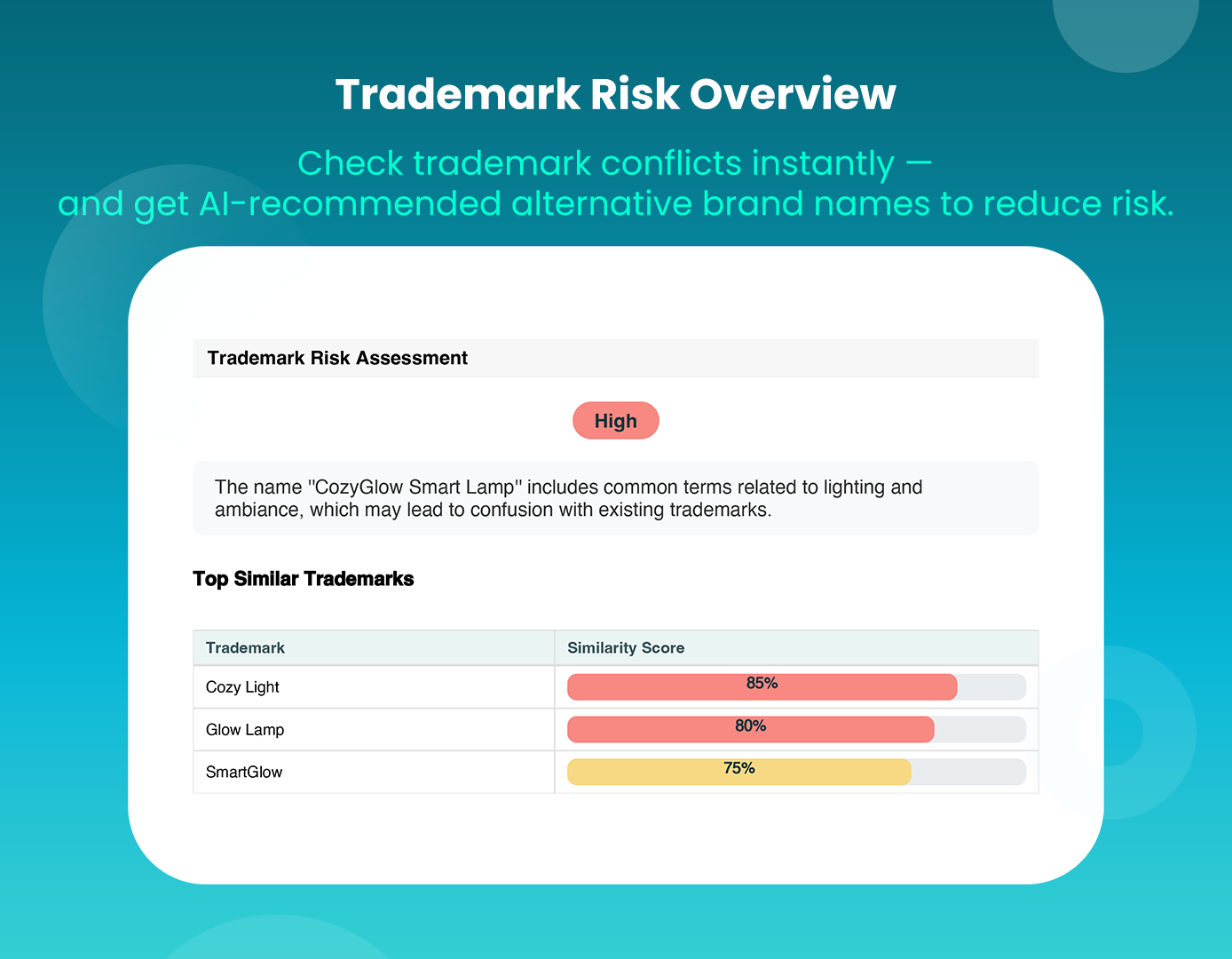
- Patent/Trademark Conflict Check (High-Level)
- Where there might be conflicts based on your description and name
- Enough signal to know whether you should speak to an IP professional now, not later
- Viability & Readiness Assessment
- A composite Readiness Score (0–100)
- Sub-scores for originality, risk, and basic crowdfunding fit
- Plain-English Commentary
- “Your hook is strong but the category is saturated—lean harder into X and Y.”
- “Your proposed brand name collides with existing marks in similar classes.”
For example, a portable espresso brewer might come back with:
- Market Demand: Strong (lots of interest, plenty of complaints about convenience)
- Competition: High (many look-alikes, but few focusing on backpackers)
- IP Risk: Medium (similar patents around heating mechanism; needs expert review)
- Readiness Score: 71/100 → “Proceed, but tighten your differentiation and check IP before public reveal.”
The goal is not to dazzle you with a score. It’s to give you a grounded sense of where you stand, in language you don’t need an MBA or legal degree to interpret.
How Does InventaIQ Use Validation to Actually Help You?
Once you have a validation report, how do you turn it into real progress?
You use the report as a decision tool. It helps you refine your idea, pitch, and risk profile—so when you do move into campaign planning, you’re not building on sand.
Here’s how to make the report genuinely useful:
- If your score is low (e.g., under 50/100)
- Treat this as a warning, not a verdict on your abilities.
- Ask: Is the core idea weak—or is the positioning lazy?
- Look at the “why” behind the score: is it IP risk, market fatigue, or unclear value?
- If your score is medium (e.g., 50–70/100)
- You probably have something, but it needs sharper edges.
- Maybe your product is okay, but your story is generic.
- Maybe the idea is solid, but the category is brutally crowded, so you need a narrower niche.
- If your score is high (e.g., 70+/100)
- Good. Don’t get arrogant, but don’t keep endlessly tinkering either.
- Use the insights to lock your positioning and move into deeper planning: costs, reward tiers, roadmap.
For example, imagine a sustainable yoga mat:
- First scan: 58/100 – “Lots of similar claims, unclear differentiation beyond ‘eco-friendly.’”
- After refining: “Non-slip mat designed specifically for hot yoga, made from recycled wetsuits” → 73/100, with clearer niche and stronger story.
Same person, same general idea. The difference is using data instead of ego.
Inside InventaIQ, this Stage 1 validation is meant to be your starting line, not your finish line. The next logical step is structured campaign planning—funding goals, reward ladders, timelines—which the platform is expanding into.
“Start your journey from idea to funded—Stage 1 helps you decide whether to run. Stage 2 (Campaign Planning) helps you decide how to run.”
(Campaign Planning tools inside InventaIQ are being rolled out in phases.)
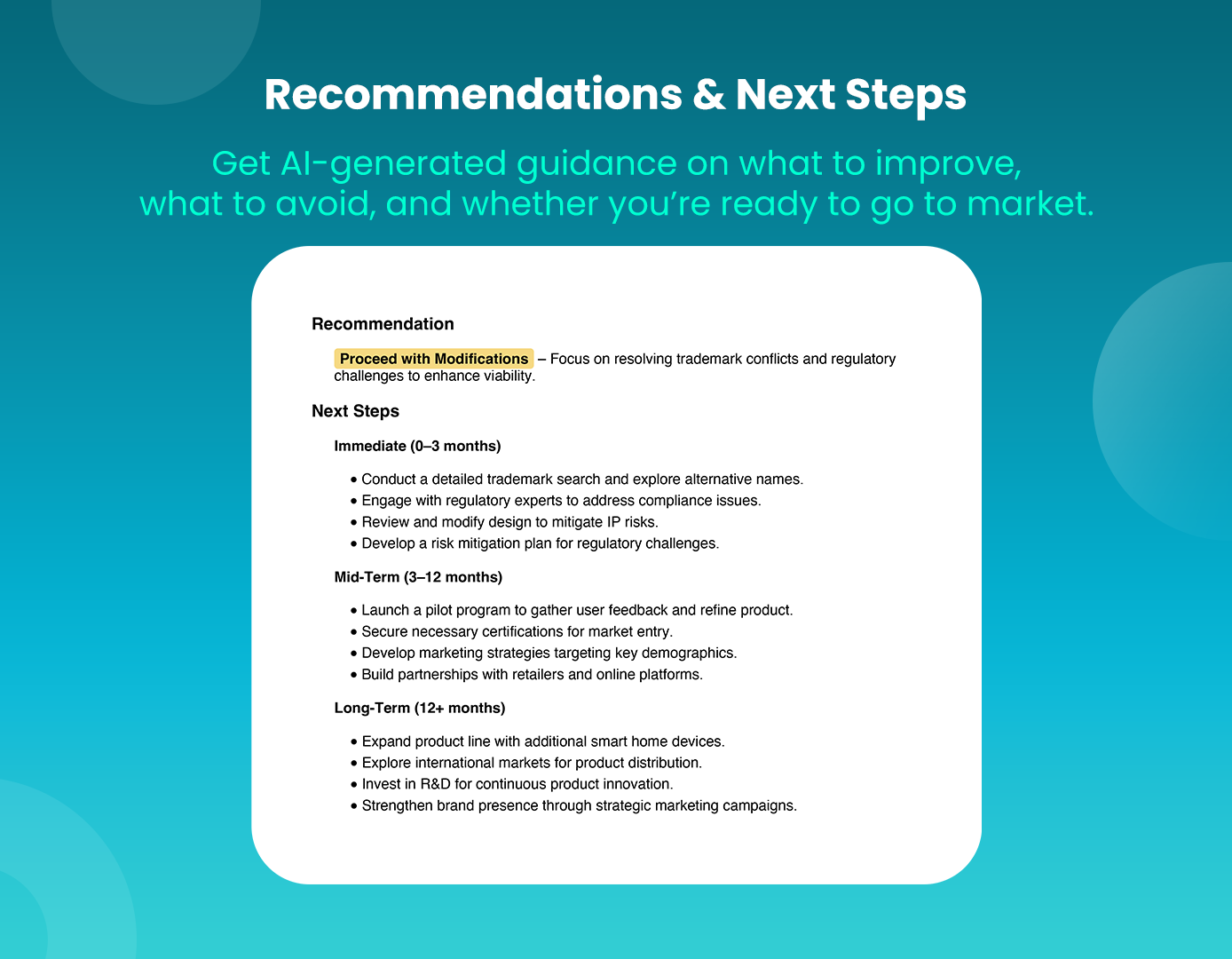
How to Use Validation Results to Plan Your Next Step
What should you do after validating your crowdfunding idea?
Use the report as a filter for your next move: refine, pivot, or advance. Don’t treat it as a trophy—treat it as a brief for your next round of work.
A simple decision path:
- Red Light – Major issues flagged
- Example: high IP conflict risk, weak differentiation, dead category.
- Action: Step back. Either significantly reshape the idea or put it aside. Better to kill an idea than let it slowly drain you.
- Yellow Light – Mixed signals
- Example: strong demand, but overcrowded space; decent differentiation, but unclear pitch.
- Action: Use the report’s commentary as a checklist. Improve 2–3 specific areas, then re-scan.
- Green Light – Solid fundamentals
- Example: clear niche, moderate competition, low IP risk, healthy demand.
- Action: Move into detailed campaign planning: cost modeling, reward design, content creation.
The point of all this is simple: you should not be guessing. You should be making conscious decisions with your eyes open.
Conclusion
Crowdfunding is already hard. The least you deserve is a clear, honest view of whether your idea is ready before you stake your time, money, and reputation on it.
Validation won’t remove all the uncertainty—nothing does. But it can:
- Save you from avoidable legal and competitive surprises
- Help you sharpen your story and niche
- Tell you when to move forward and when to walk away
That’s what InventaIQ’s Campaign Readiness Scan is designed to do: give creators a fast, structured, reality-based starting point in a space full of noise and guesswork.
If you’ve been carrying an idea around in your head for too long, this is a straightforward next step:
✅ Run your first Campaign Readiness Scan now at app.inventaiq.ai and see, in a few minutes, where your idea really stands.
Date: 10/22/2025
Want instant insights on patents, trademarks, and market fit?
Blog Archives
Related Blogs


- Lorem Ipsum is simply dummy text of the printing and typesetting
- Lorem Ipsum is simply dummy text of the printing and typesetting
- Lorem Ipsum is simply dummy text of the printing and typesetting
- Lorem Ipsum is simply dummy text of the printing and typesetting
- Lorem Ipsum is simply dummy text of the printing and typesetting
Conclusion
Conclusion
Lorem Ipsum is simply dummy text of the printing and typesetting industry. Lorem Ipsum has been the industry's standard dummy text ever since the 1500s, when an unknown printer took a galley of type and scrambled it to make a type specimen book.