This guide explains how AI combines market, IP, and competitor data into a single actionable score, helping you turn uncertainty into clarity before you launch.
Introduction
Every idea feels promising — until the data says otherwise.
That’s why Go/No-Go Scoring exists: to bring objectivity into decision-making.
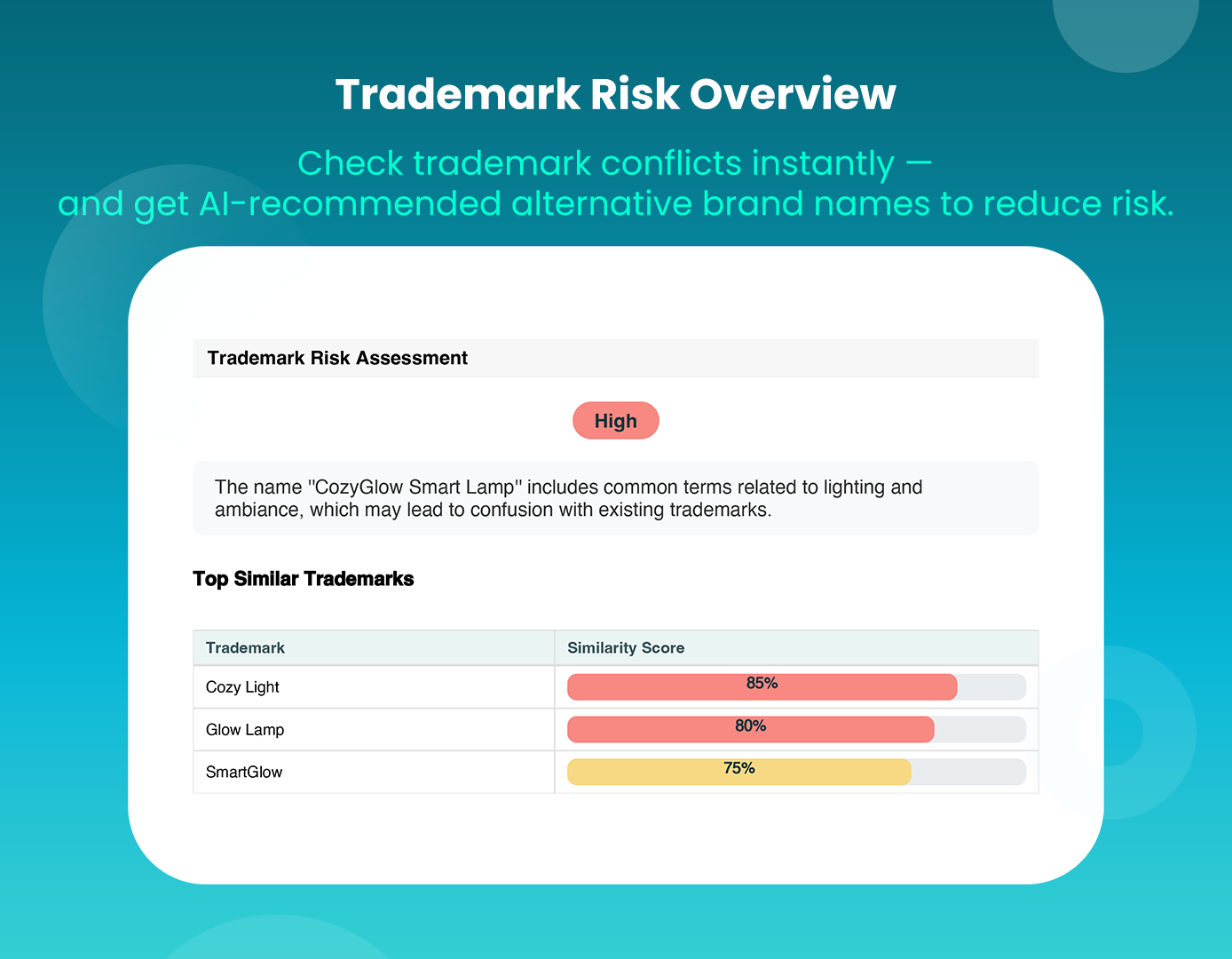
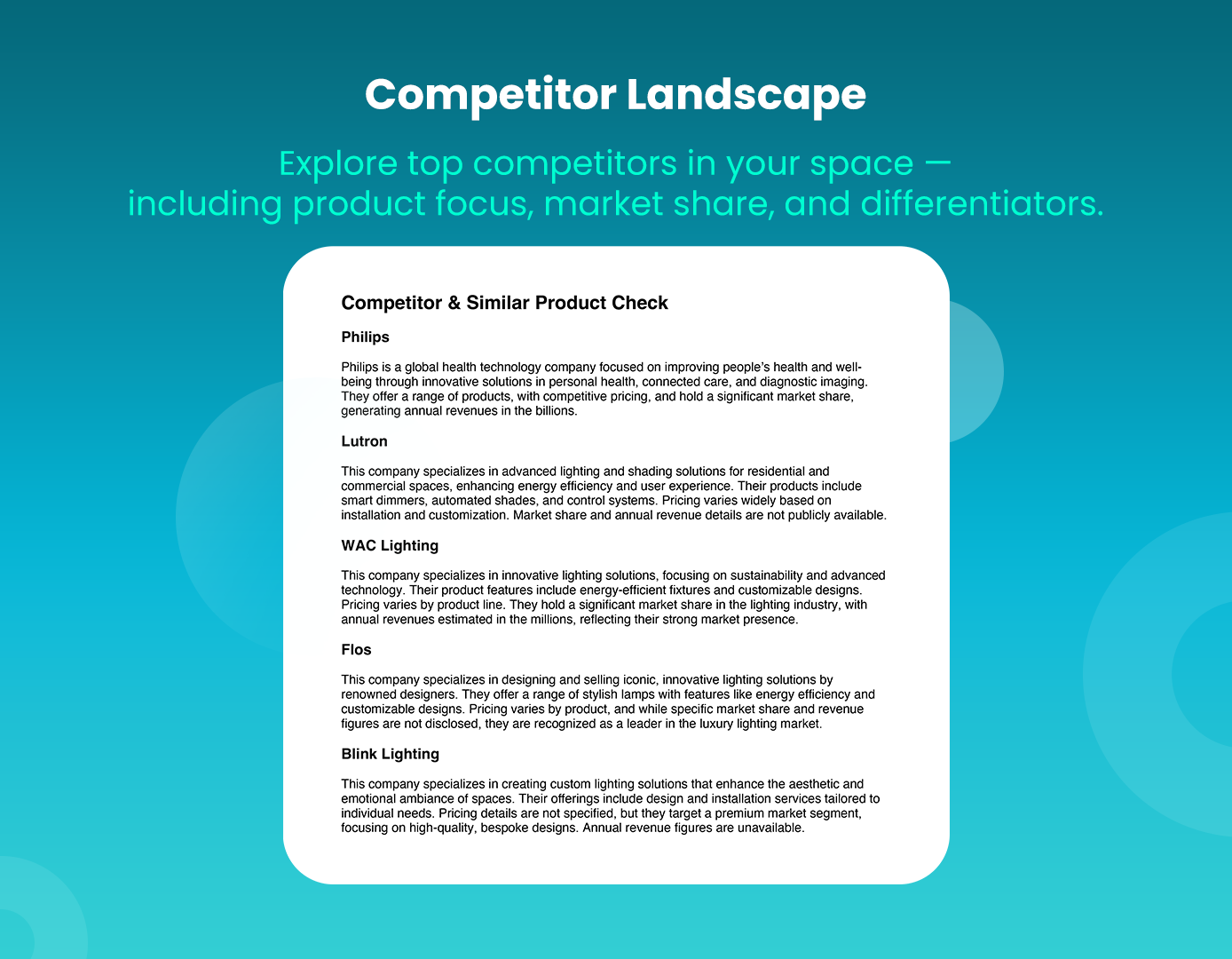
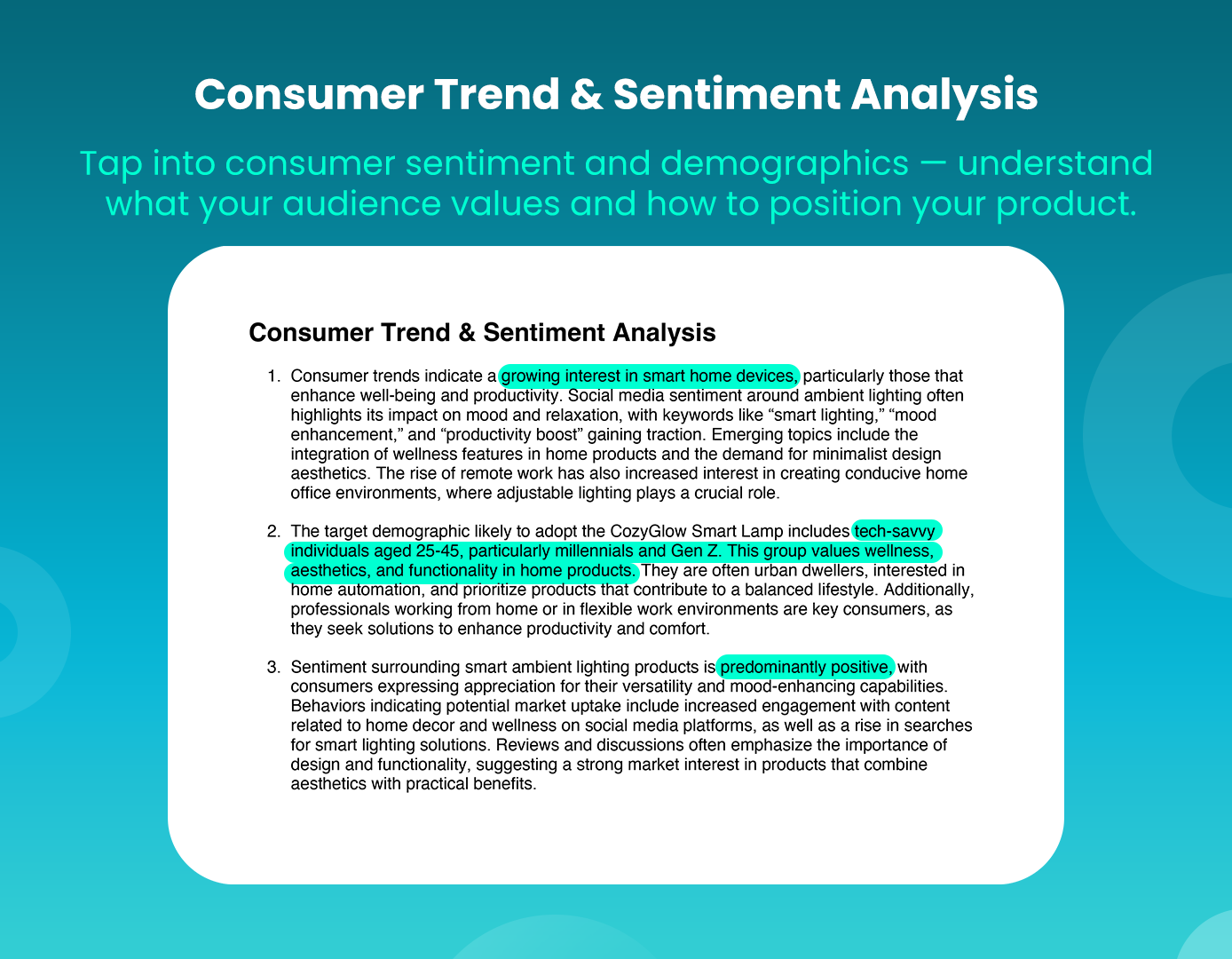
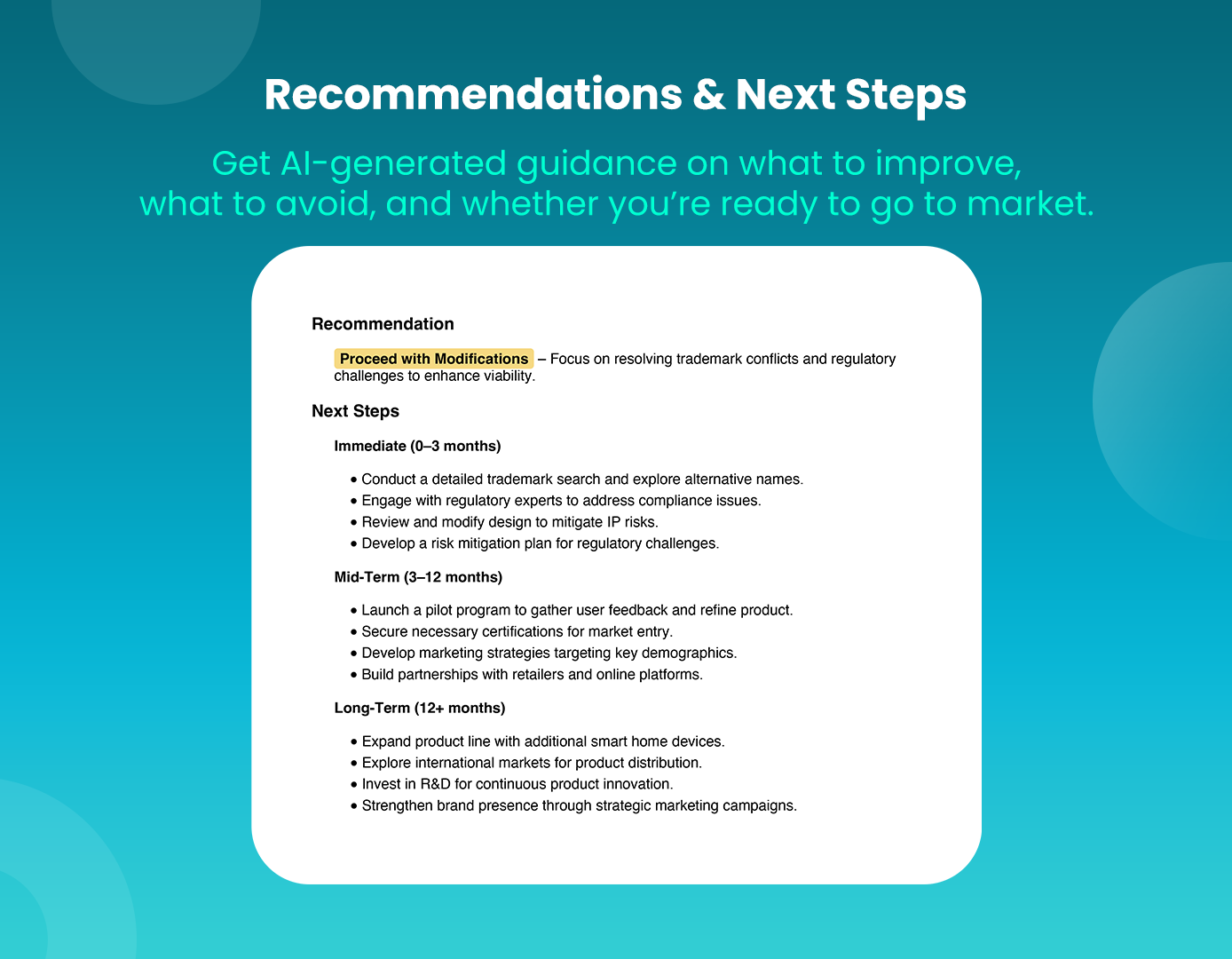
Instead of relying on instinct alone, InventaIQ uses AI to synthesize results from idea validation, market sizing, IP checks, and competitor analysis into one clear readiness signal.
With this score, you can decide whether to Go (proceed to planning), No-Go (pause and refine), or Pivot (redirect your strategy).
This process ensures that every step forward is backed by evidence — not emotion.
What Is Go/No-Go Scoring?
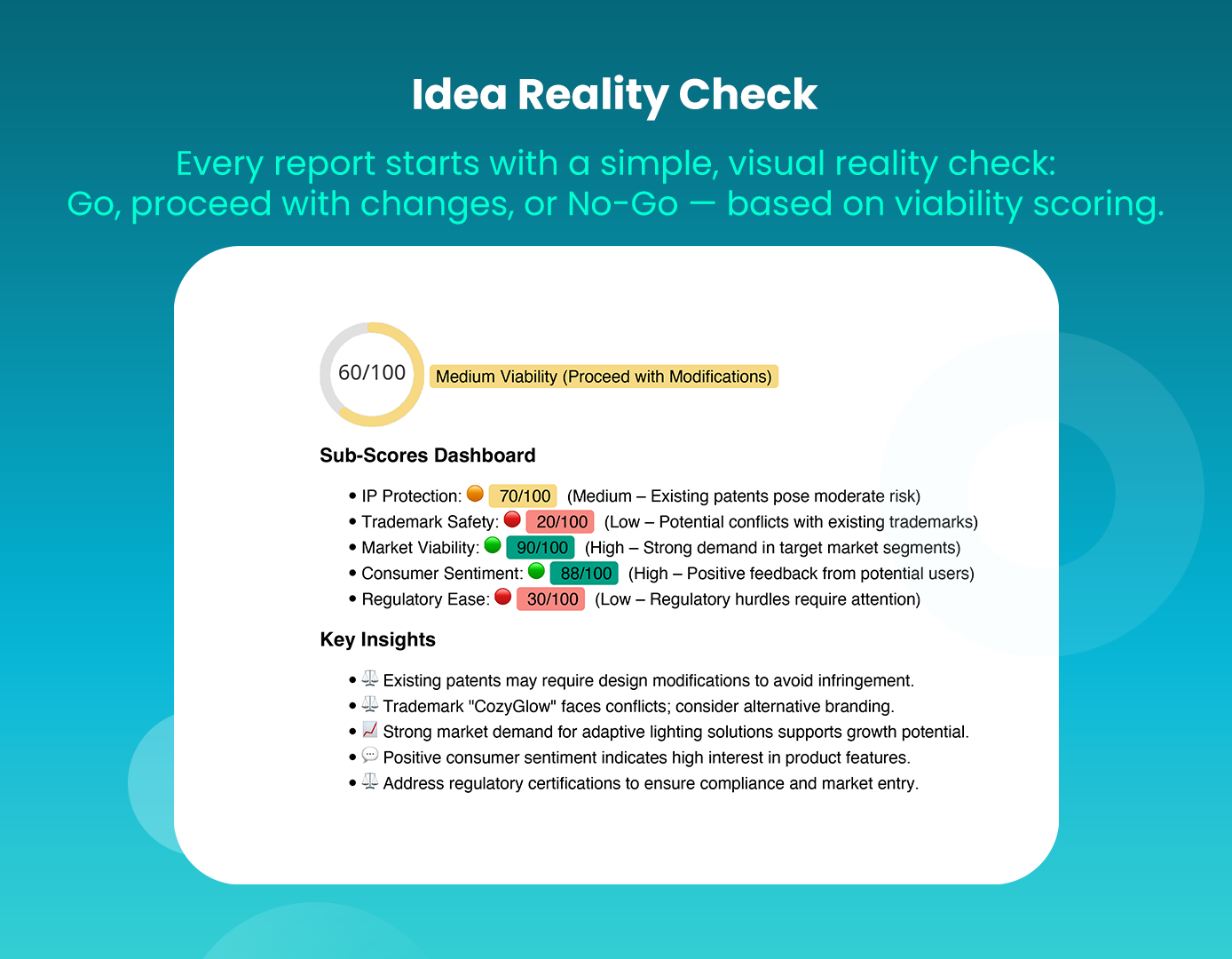
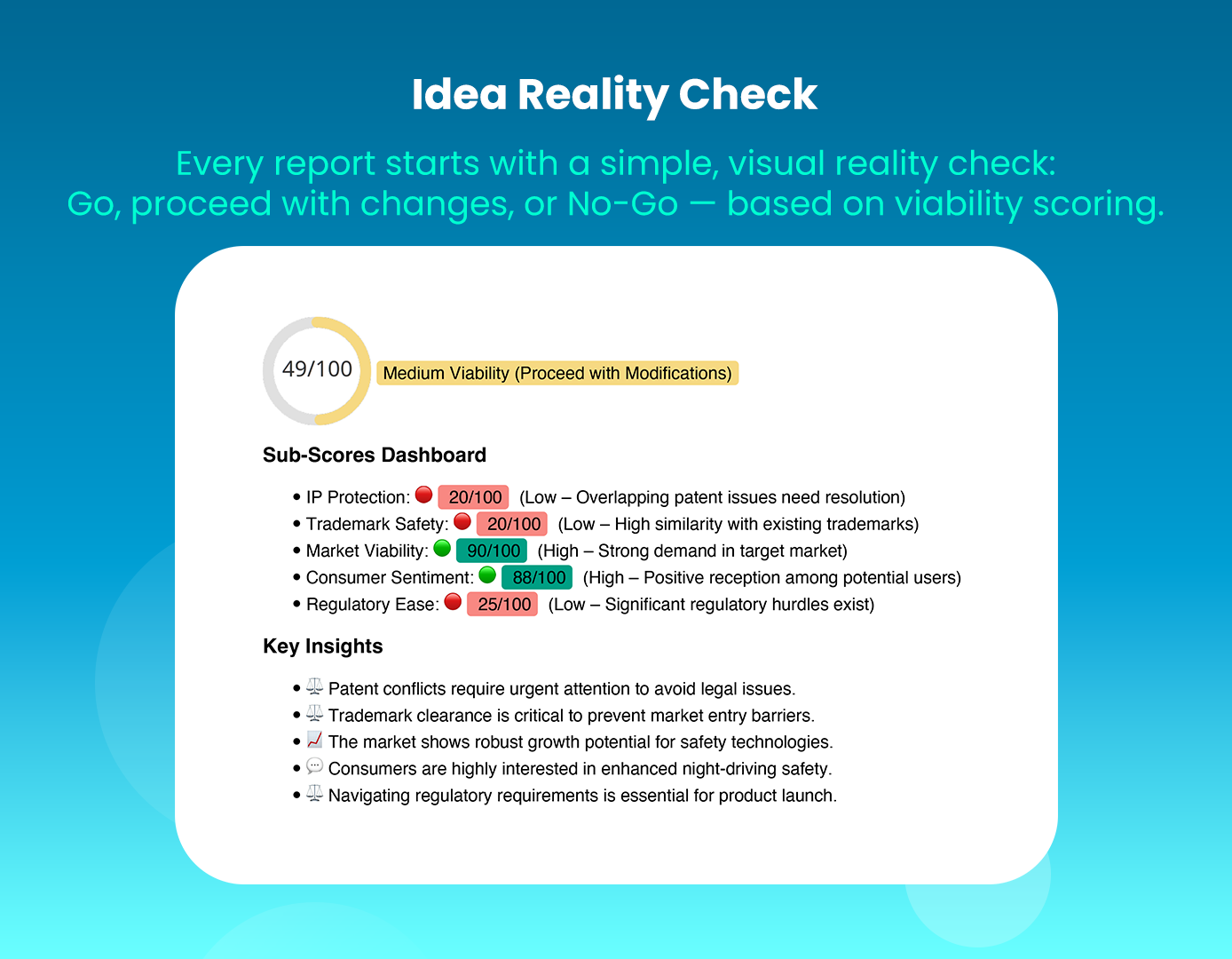
Go/No-Go Scoring is a decision model that translates complex research data into a simple, color-coded framework.
| Score Zone | Meaning | Recommended Action |
| 🟢 Go (80–100%) | Your idea shows strong demand, minimal IP risk, and clear differentiation | Proceed to Campaign Planning |
| 🟡 Pivot (60–79%) | Promising potential, but needs refinement — e.g., pricing, positioning, or design | Adjust and re-validate |
| 🔴 No-Go (Below 60%) | Market fit or IP issues present major barriers | Reassess concept or pause development |
InventaIQ’s AI evaluates multiple dimensions — originality, demand, competition, and readiness — to calculate your personalized score.
Why Scoring Matters for Creators
- Reduces risk: Prevents investing in unviable ideas.
- Simplifies decisions: Transforms complex validation data into clear next steps.
- Prioritizes focus: Directs your time and budget toward ideas with the highest potential.
- Builds confidence: Data-backed clarity makes pitching easier to investors or collaborators.
Go/No-Go Scoring ensures that each campaign launched through InventaIQ stands on solid, validated ground.
How InventaIQ Calculates Your Go/No-Go Score
1. Validation Inputs
The AI gathers data from multiple analyses:
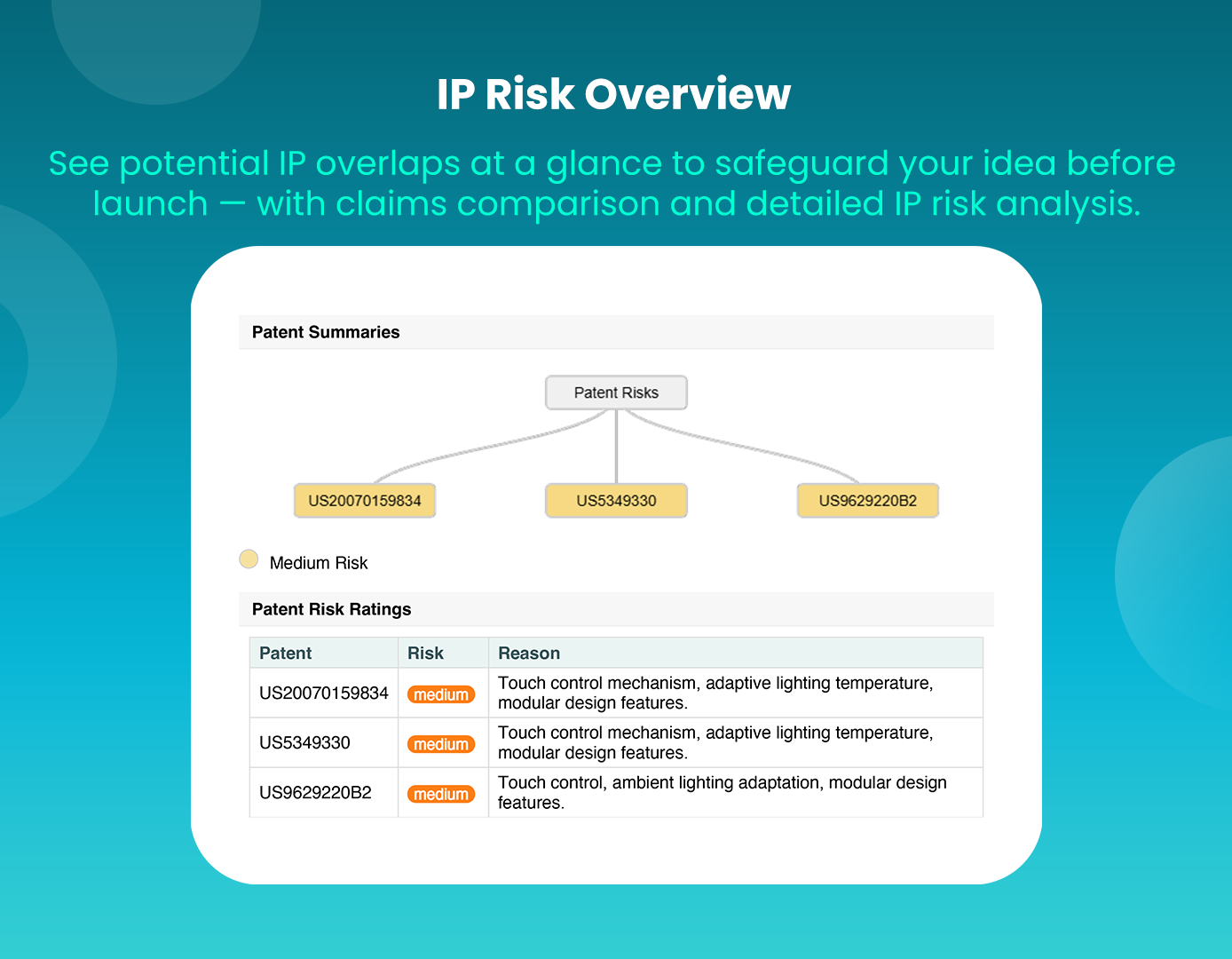
- Idea originality (Prior Art & IP scan)
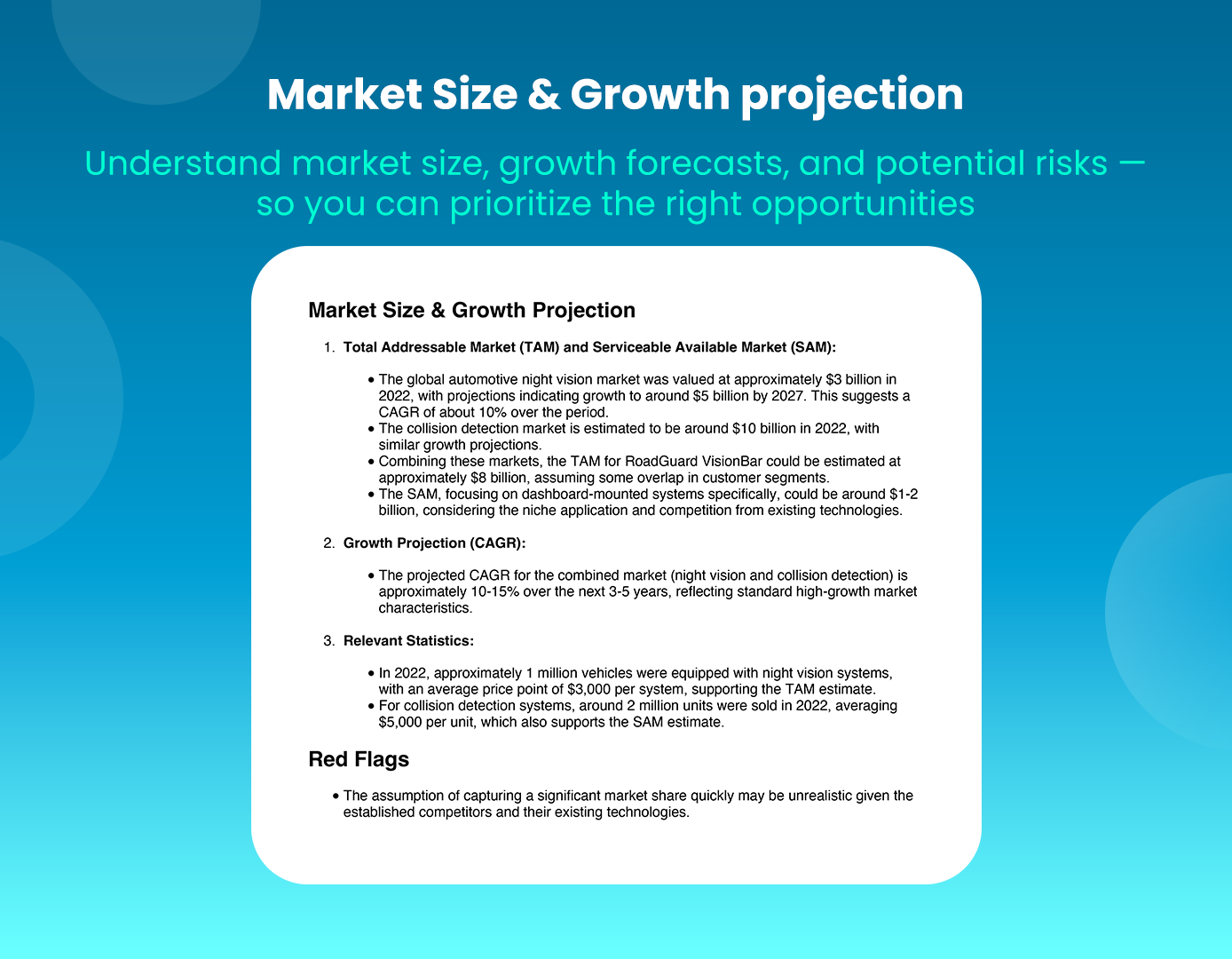
- Market demand and audience reach
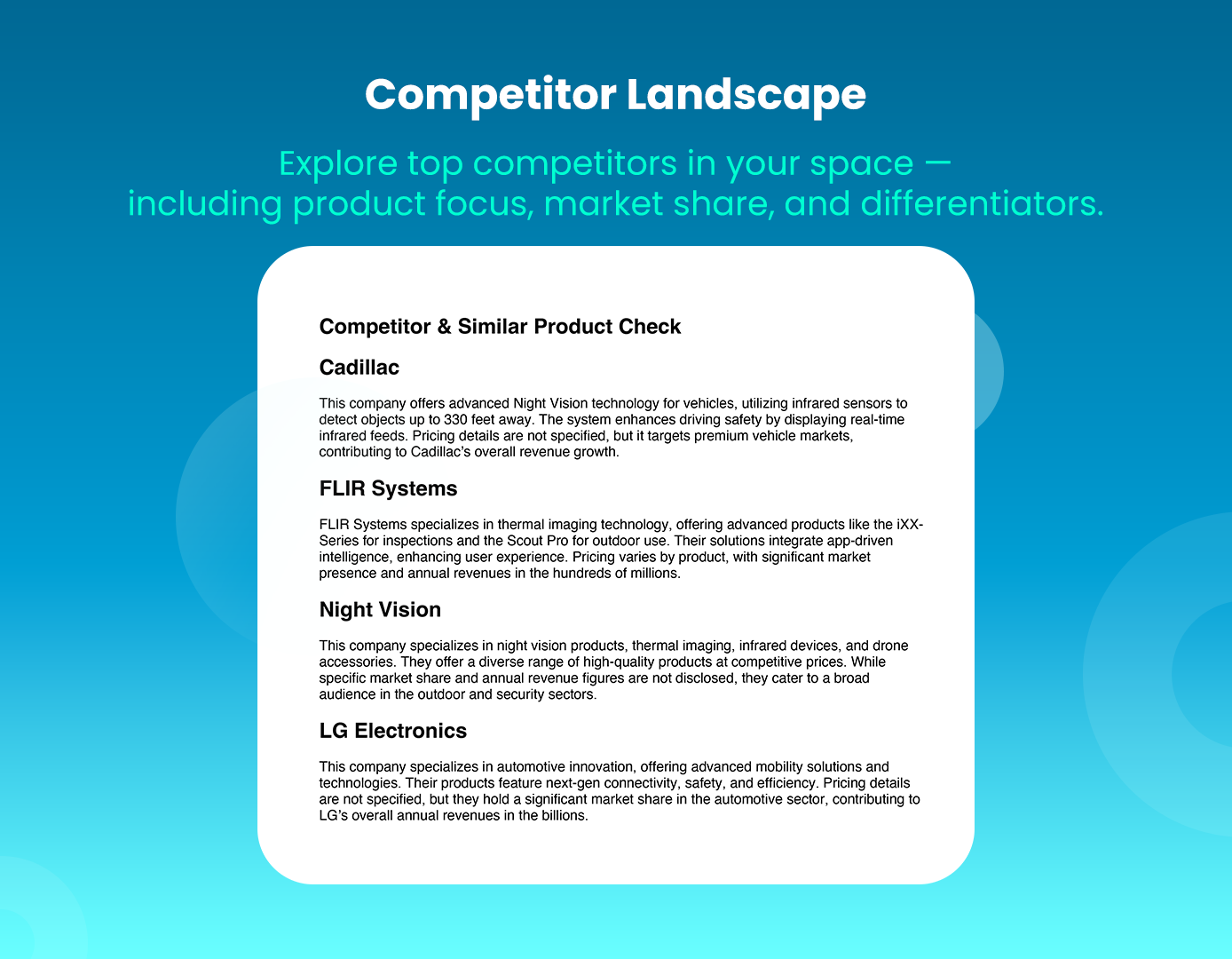
- Competitor differentiation
- Category performance benchmarks
2. Weighted Scoring Model
Each factor is assigned a weighted importance based on crowdfunding success data.
For example:
- Market Demand – 30%
- IP Safety – 25%
- Competitor Gap – 20%
- Readiness & Story Potential – 15%
- Creator Preparedness – 10%
3. AI Evaluation
The system runs your results through a predictive model trained on 50,000+ past campaigns, identifying success-likelihood patterns.
4. Result Visualization
You receive a Go/No-Go dashboard with:
- A percentage score
- A traffic-light indicator (Green, Yellow, Red)
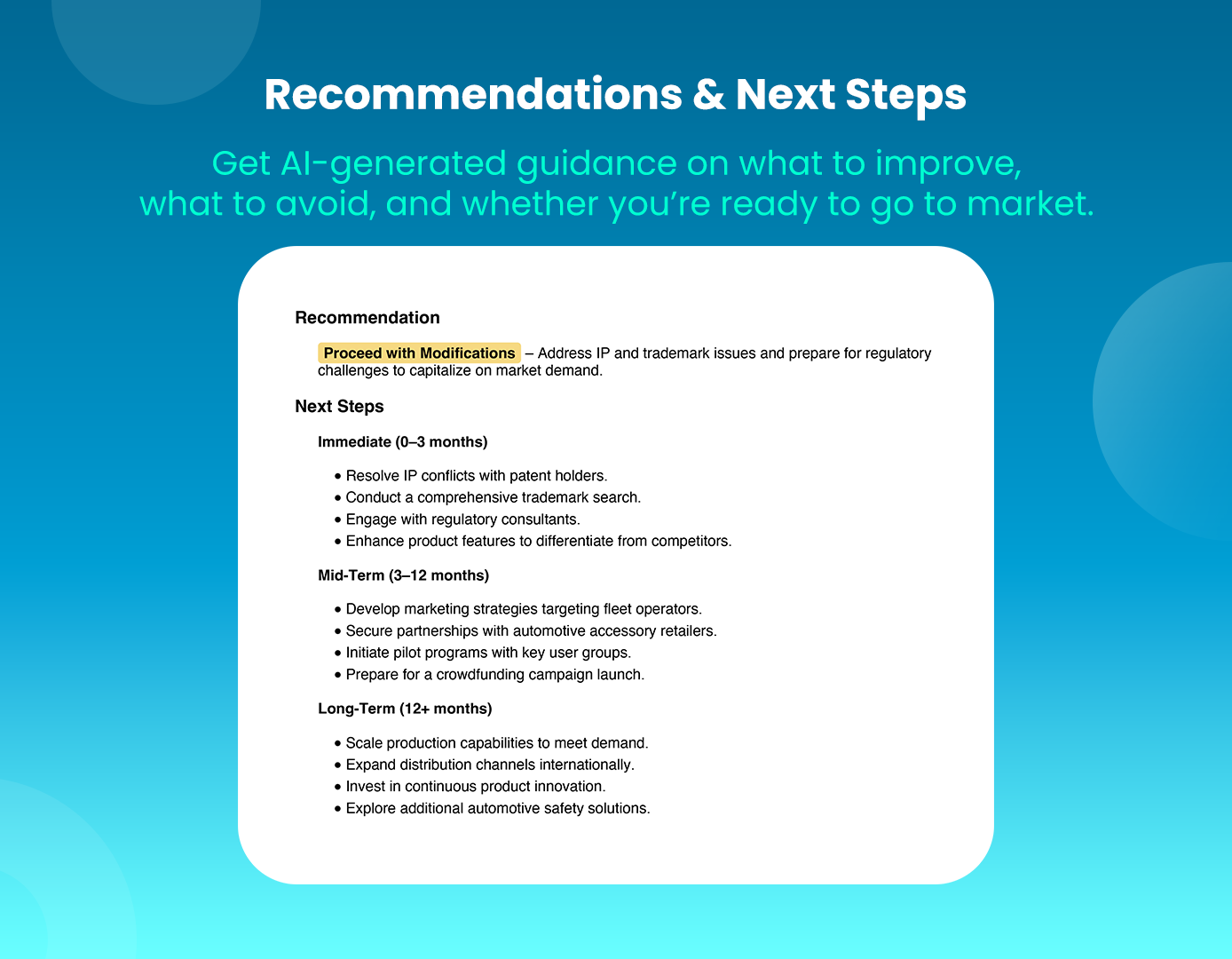
- Recommendations on what to fix or improve
What to Do Next
| Score | Action | Example Next Step |
| Go | Begin campaign planning with InventaIQ’s tools | Move to reward design, pricing, and pre-launch planning |
| Pivot | Adjust and re-validate | Refine product messaging or price points |
| No-Go | Pause development temporarily | Reassess product feasibility or target audience |
Each score outcome includes direct links to the next InventaIQ feature you’ll need — ensuring you never lose momentum, even when pivoting.
How InventaIQ Empowers Smarter Decisions
InventaIQ doesn’t just give you data — it gives you direction.
By combining insights from every validation layer, it produces a readiness score that mirrors how professional product analysts assess feasibility.
This approach turns subjective creativity into measurable strategy — the key difference between hopeful ideas and successful launches.
FAQ — Go/No-Go Scoring for Crowdfunding Creators
1. What is Go/No-Go scoring in crowdfunding?
Go/No-Go Scoring is a decision framework that turns complex validation data into a simple readiness score. It combines market demand, IP safety, competitor insights, and overall preparedness into a single percentage and color zone (Go, Pivot, or No-Go) so creators know whether to move forward, refine, or pause their idea.
2. How does InventaIQ calculate my Go/No-Go score?
InventaIQ pulls inputs from multiple analyses — idea originality, prior art and IP checks, market sizing, competitor scan, and category benchmarks. These are run through a weighted scoring model and an AI predictive engine trained on 50,000+ campaigns to generate your final readiness score and recommendations.
3. What do the Green, Yellow, and Red score zones mean?
🟢 Go (80–100%) – Strong demand, low IP risk, and clear differentiation; proceed to campaign planning.
🟡 Pivot (60–79%) – Good potential but needs work on pricing, positioning, or design; refine and re-validate.
🔴 No-Go (below 60%) – Significant market or IP issues; pause, rethink the concept, or explore a different direction.
4. What factors influence my Go/No-Go score the most?
Key drivers include:
- Market demand and audience size
- IP risk level (prior art and active patents)
- Strength of differentiation vs competitors
- Category performance benchmarks
- Overall campaign readiness (story, asset quality, and planning)
5. Can I improve my Go/No-Go score over time?
Yes. The score is dynamic. You can refine your product, adjust pricing, reposition your messaging, or address IP risks, then re-run validation in InventaIQ. Each iteration updates your score and brings you closer to a confident “Go.”
6. Is a No-Go score the end of my idea?
Not necessarily. A No-Go score means launching now would be high risk — due to weak demand, serious IP conflicts, or crowded competition. It’s a signal to pause, rethink, or pivot, not a final verdict. Many successful campaigns started as early No-Go concepts that were improved and revalidated.
7. How is Go/No-Go scoring different from basic market research?
Traditional research often looks at one dimension at a time (survey, keyword data, or competitor review). Go/No-Go Scoring blends market, IP, competitor, and readiness data into one holistic score, using AI to spot patterns in what actually leads to funding success.
8. Do I need IP checks for a Go/No-Go score?
IP checks are strongly recommended. Without prior art and FTO insights, your idea might look promising on market demand alone but still face serious patent risks. InventaIQ’s Go/No-Go model gives extra weight to IP safety for exactly this reason.
9. When should I use Go/No-Go scoring in my crowdfunding journey?
Use Go/No-Go Scoring after initial idea validation and before deep campaign planning. It’s the bridge between “this seems interesting” and “I’m ready to invest in full campaign assets, ads, and manufacturing.”
10. How does my Go/No-Go score connect to other InventaIQ tools?
Your score links directly into the next steps:
- Go: move into Campaign Planning, funding goal setup, and pre-launch roadmap.
- Pivot: refine using Market Sizing, Competitor Scan, and Asset Generation.
- No-Go: revisit Idea & IP Validation to explore new angles or alternative concepts.
Conclusion — Confidence Through Clarity
Decisions backed by data are decisions built for success.
With InventaIQ’s Go/No-Go Scoring, you’ll know exactly when to move, when to refine, and when to wait — giving your idea the best possible chance to thrive.